The Cognitive Biases That Lead UK Casino Players to Bad Decisions
From the bright lights of a Grosvenor Casino to the quick spin of a UK online slot, our brains are wired to make predictable errors when we gamble. Every bet placed, whether on a football accumulator or a spin of the roulette wheel, is filtered through a mind evolved for survival, not for calculating true odds. Understanding the inherent mental shortcuts—our cognitive biases—that govern our decisions is the key to recognising why we often act against our own best financial interests in the thrilling environments of UK gambling.
What Are Cognitive Biases and Why Do They Matter in UK Gambling?
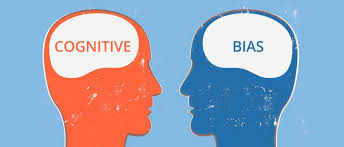
Cognitive biases are systematic patterns of deviation from rationality in judgment. They are mental shortcuts, or heuristics, honed by evolution to allow for swift decision-making. However, in the modern context of UK gambling, these same shortcuts become critical vulnerabilities. The fast-paced, reward-based environment of British betting shops, online platforms, and casino floors is expertly designed to exploit these innate wiring flaws. The constant stream of information, near-misses, and intermittent rewards hijacks our intuitive brain systems, leading us away from logical assessment and towards emotionally charged, often costly, decisions.
System 1 vs. System 2 Thinking in a Betting Context
Nobel laureate Daniel Kahneman’s model of ‘System 1’ and ‘System 2’ thinking is crucial here. System 1 is fast, automatic, emotional, and intuitive—it’s the part of your brain that feels a ‘gut instinct’. System 2 is slower, more deliberative, and logical—it’s the part that should calculate the actual probability. UK gambling, especially rapid-play games like online slots, deliberately keeps players in System 1. There’s no time for slow, analytical thought when a new spin is available every few seconds, creating a perfect storm for biased decision-making.
The Gambler’s Fallacy: Chasing Patterns in Randomness
Perhaps the most famous cognitive bias in gambling is the Gambler’s Fallacy: the mistaken belief that past random events influence future ones. A UK player watching a roulette wheel land on black five times in a row may feel a strong conviction that ‘red is due’. This is a fundamental misunderstanding of independence. Each spin of a genuine random number generator is a fresh event; the wheel or machine has no memory. Our pattern-seeking brains, however, find it intensely difficult to accept true randomness, leading us to see trends and destinies where none exist.
The Illusion of Control on British Roulette and Slots
This fallacy often pairs with an ‘illusion of control’. Choosing your own lottery numbers, blowing on dice, or using a ‘lucky’ button to stop a digital slot reel—these superstitious rituals are attempts to impose order on chaos. They create a false sense of agency, making the player feel like an active participant influencing an outcome, rather than a passive subject of chance. This dangerously deepens engagement.
The Sunk Cost Fallacy: ‘I’ve Come Too Far to Stop Now’
This bias occurs when we continue a behaviour based on previously invested resources (time, money, effort) that we cannot recover. In UK gambling, this is the engine of loss chasing. A punter who has lost £50 on a betting app might reason, “I can’t stop now, I need to win that money back.” The £50 is already gone—a ‘sunk cost’—but the emotional desire to avoid feeling the pain of that loss drives further, often riskier, bets. This escalates financial harm, as decisions are made to justify past losses rather than assess future odds rationally.
The ‘Just One More Spin’ Mentality in Online Casinos
Online casino design expertly fuels this fallacy. Features like ‘bonus buy’ options or ‘spin again’ prompts directly capitalise on the feeling of being invested in a session. The player thinks, “I’ve already spent this much time and money, the big win must be close,” mistaking cumulative investment for increasing probability. This transforms a session from a series of independent bets into a single, costly narrative.
Confirmation Bias: Seeing What We Want to Believe
Confirmation bias is our tendency to search for, interpret, favour, and recall information that confirms our pre-existing beliefs. A UK gambler convinced a certain horse racing tipster is brilliant will remember the one big win they called and forget the ten losing tips. This bias creates an echo chamber where losing strategies feel validated, and the reality of the house edge is mentally pushed aside.
Selective Memory of ‘Near Misses’ on UK Slot Machines
Modern UK slot machines are engineered to exploit this. A ‘near miss’—where two jackpot symbols line up with the third just above or below—is registered by our brain as a near-win, not a loss. We remember these thrilling near-misses as evidence we are ‘close to winning’, confirming our belief that we are skilled or lucky on that particular machine. In reality, a near miss is a loss, and its design is a deliberate psychological trigger.
Anchoring Bias: When the First Number Skews Your Bet
Anchoring is the human tendency to rely too heavily on the first piece of information offered (the “anchor”) when making decisions. In gambling, this initial number sets a mental reference point that all subsequent judgments are skewed towards. For example, seeing initial odds of 10/1 for an outsider can make later odds of 5/1 seem like poor value, even if the true probability hasn’t changed. Similarly, hearing a friend’s story of a £1000 win can anchor your expectations for what a ‘normal’ win looks like, distorting your own betting stakes.
How Bonus Offers Anchor Perceptions of Value
Betting platforms use anchoring masterfully with bonuses. A “Bet £10, Get £30 in Free Bets” offer sets a £30 anchor for value. This can make your own £10 stake seem insignificant and encourage you to bet on events you otherwise wouldn’t, as you’re mentally playing with ‘the house’s money’. The anchor of the bonus amount distorts the real value of your own cash and the risk you’re taking.
Recognising these ingrained cognitive biases is the first, crucial step for UK players. It is the foundation of moving from System 1’s automatic, error-prone reactions to the more mindful, informed, and protective deliberation of System 2. By understanding the science behind our decisions, we can begin to see the betting slip, the slot machine, and the sportsbook not just as games of chance, but as arenas where our own mind is the most influential—and often the most deceptive—player at the table.