IQ Heritability vs Environmental Effects: A UK Cognitive Science Analysis
In the high-stakes world of UK casino gambling, every decision reflects a complex interplay between innate cognitive ability and environmental influences. A player calculating odds at a Grosvenor Casino blackjack table is not just deploying raw intelligence; they are channelling a lifetime of learning, shaped by their education, socioeconomic background, and cultural context. This mirrors the central debate in cognitive science: to what extent is our cognitive capacity, often measured by IQ, a product of our genes (nature) versus our surroundings (nurture)? For Britain, with its unique social structures and a significant gambling economy, understanding this interplay is crucial. It moves beyond academic theory to offer tangible insights into the cognitive biases of UK casino players and the behavioural economics of gambling in Britain.
The IQ Heritability Debate: Nature vs Nurture in the UK Context
The question of what determines intelligence has long been framed as a battle between nature and nurture. In the UK, this debate is grounded in robust, longitudinal research that provides a distinctly British perspective on cognitive heritability. The core of the argument seeks to quantify the proportion of IQ variation in a population attributable to genetic differences.
The Role of Twin Studies
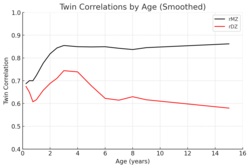
Twin studies are the cornerstone of heritability research. By comparing the IQ similarities of identical twins (who share 100% of their DNA) with fraternal twins (who share about 50%), scientists can estimate genetic influence. The consistent finding across decades is that genetic factors account for a substantial share of the variance in IQ scores, with estimates typically increasing from childhood into adulthood.
UK-Specific Research Insights
British science has been at the forefront of this field. The landmark Twins Early Development Study (TEDS) at King’s College London is one of the world’s most extensive twin studies. Following over 10,000 pairs of twins born in England and Wales, TEDS data has been instrumental in showing that genetic influences on cognitive abilities and educational achievement are significant and pervasive within the UK population. This research confirms that while genes provide a blueprint, they are far from the sole architect of cognitive function.
Environmental Sculptors: How UK Society Shapes Cognitive Abilities
If genes provide the clay, then the environment is the sculptor. The UK’s distinct social and educational landscape plays a powerful role in moulding cognitive development, often mediating the expression of genetic potential. This environmental influence is starkly visible in two key areas: formal education and socioeconomic status.
Education and IQ in Britain
The UK education system, with its varying pedagogical approaches and resource allocation, directly impacts cognitive skill development. Organisations like the Education Endowment Foundation (EEF) rigorously test interventions to improve teaching and learning, particularly for disadvantaged pupils. Their work highlights how high-quality, evidence-based teaching can raise attainment and, by extension, develop the cognitive abilities measured by IQ tests, such as problem-solving and verbal reasoning.
Socioeconomic Impacts on Cognitive Development
Socioeconomic status (SES) is a potent environmental factor. Children from lower-SES backgrounds in the UK are often exposed to different cognitive stimuli, nutritional factors, and stress levels than their higher-SES peers. This can lead to measurable disparities in cognitive development. Environmental factors linked to SES include:
- Quality of early childhood education and home learning environment.
- Access to books, educational toys, and stimulating extracurricular activities.
- Nutritional status and exposure to environmental toxins.
- Chronic stress, which can affect brain development and executive function.
The Heritability Paradox: Unraveling Gene-Environment Interplay
Modern cognitive science has moved beyond the simplistic nature-versus-nurture dichotomy to explore a more complex reality: genes and environment are in constant, dynamic conversation. This interplay means heritability is not a fixed number but a phenomenon that can change based on context.
Epigenetics and Cognitive Traits
Epigenetics—the study of how environmental factors can switch genes on or off without changing the DNA sequence—revolutionises our understanding. Stress, diet, and life experiences can leave epigenetic marks that influence cognitive function and may even be passed to subsequent generations. This means two individuals with the same genetic predisposition for a cognitive trait may express it differently based on their life experiences.
The Dynamic Interdependence
Research utilising the UK Biobank, a major biomedical database, is unravelling this interdependence. By linking genetic data with detailed health, lifestyle, and environmental information from hundreds of thousands of UK participants, scientists can see how genetic predispositions for cognitive traits interact with factors like urban living, education, or diet. This reveals a process called gene-environment correlation, where individuals often seek out environments that match their genetic propensities, further blurring the lines between cause and effect.
Cognitive Biases in Decision-Making: From IQ to Gambling Choices
This nuanced understanding of cognitive origins is vital when analysing real-world decisions, such as those made by UK gamblers. An individual’s cognitive style, shaped by both heritable tendencies and environmental learning, directly influences their susceptibility to the cognitive biases prevalent in gambling environments, as monitored by the UK Gambling Commission.
IQ and Risk Assessment in Gambling
While higher IQ may aid in understanding complex odds, it does not inoculate against cognitive biases. A player might intellectually grasp the house edge yet still fall prey to the gambler’s fallacy (believing past events affect future independent outcomes) or the illusion of control (overestimating their skill in games of chance). Heritable traits like impulsivity or reward sensitivity can interact with these biases, influencing risk assessment in ways that are not purely rational.
Behavioural Economics of UK Betting
The behavioural economics of gambling in Britain examines how cognitive shortcuts (heuristics) lead to systematic errors. Key biases reported in the UK market include:
- Overconfidence: Overestimating one’s knowledge or skill, especially after a few wins.
- Availability Heuristic: Judging the likelihood of an event based on how easily examples come to mind (e.g., remembering a big jackpot win from the news).
- Sunk Cost Fallacy: Continuing to bet to “chase” losses, feeling invested in a losing course of action.
- Anchoring: Relying too heavily on the first piece of information offered (e.g., an initial high bet suggestion).
Applying the Insights: UK Gambling Policy and Personal Decisions
The synthesis of IQ heritability research and behavioural economics provides a powerful toolkit for shaping both public policy and individual behaviour within the UK’s gambling landscape. Recognising that decision-making is a product of deep-seated cognitive processes allows for more effective interventions.
Policy Recommendations
Insights from cognitive science should directly inform frameworks like the UK’s National Responsible Gambling Strategy. Policies could move beyond simple information provision to design environments that mitigate cognitive biases. This includes mandating clearer, more salient display of odds and probabilistic information, implementing “friction” mechanisms like mandatory cooling-off periods to counter impulsivity, and funding public awareness campaigns that educate on cognitive biases, not just financial risk.
Cognitive Tools for Players
For individuals frequenting venues like Grosvenor Casinos or using online platforms, cognitive science offers practical self-help strategies. Players can be encouraged to adopt mental tools such as pre-commitment (setting strict loss/time limits before play begins), engaging in “meta-cognition” (actively questioning their own reasoning during play), and reframing outcomes to understand the true probabilistic nature of games, thereby reducing the emotional impact of both wins and losses.
Ultimately, reconciling IQ heritability with environmental effects offers far more than academic satisfaction; it provides a practical blueprint for improving decision-making. For the UK, a nation with a deep interest in both cognitive science and the realities of its gambling industry, this synthesis is essential. It empowers regulators to create smarter safeguards, informs operators on ethical design, and equips players with the self-awareness to navigate risk, leading to more informed choices at the roulette wheel, the betting slip, and beyond.